An Indigenous People of Japan: Recognizing Ainu in the Law
By Aaron Hoover.
Since forced assimilation by the Imperial Japanese government, Ainu people have struggled to be recognized by the state as an indigenous people. Especially in the last twenty years, legal measures have slowly attempted to remedy this. How might the 2019 Act continue to influence this change?
Read More
Banning Cultural Appropriation in Mexico
By Ashton Holland.
Cultural appropriation is defined as “the lifting of aspects of one culture or society for use by another culture.” To minimize this, Mexico has limited exploitation of their resident’s culture through the Federal Law for the Protection of the Cultural Heritage of Indigenous and Afro-Mexican People and Communities.
Read More
Neocolonialism: Cobalt Mining in Democratic Republic of the Congo
By Anna Henson.
DRC is one of the most resource-rich countries in the world. Today, DRC tries to untangle the web weaved by centuries of colonialism and improve the lives of its citizens by stabilizing the economy. However, in order to do this, it has been selling mineral rights to one of today’s most valuable resources, cobalt, which is a critical component in lithium batteries (used in phones and electric cars). The result? Human rights questions and resurfacing colonialistic tendencies by its main investor: China.
Read More
A Media Game of Cat and Mouse: Australia’s News Media Bargaining Code
By Albert Chang.
Australia enacted the New Media Bargaining Code to support public interest journalism against digital conglomerates like Google and Facebook. The NMBC governs commercial relationship between Australia news businesses and designated digital platforms who benefit from a significant bargaining power imbalance.
Read More
What Joining the EU’s Common Security Defense Policy Means for Denmark
By Caleb Carter.
The Kingdom of Denmark has a unique history regarding its international security agreements. In fact, until recently, Denmark’s position was the opposite of a couple of its Scandinavian neighbors, Sweden and Finland. While all three of these nations are members of the European Union (“EU”), until June 1, 2022, Denmark was the only EU member state to opt-out of the EU’s Common Security and Defense Policy (“CSDP”).
Read More
Cultural Autonomy: What Can Be Done to Safeguard Afghanistan’s Heritage?
By Natalie Glitz Grumhaus.
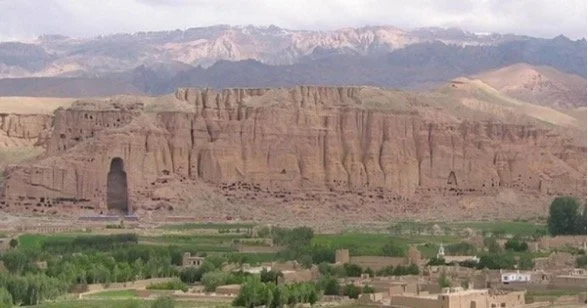
The Taliban are ideologically opposed to any form of art other than those traditionally allowed in their fundamentalist form of Islam. Unfortunately, this traditional prohibition does not apply only to their own creations, but also compels the group to obliterate any historically and culturally important works across Afghanistan that conflict with their ideology, like the Bamiyan Buddhas in 2001. This article considers the history of international intervention in cultural heritage preservation, and several ways that Afghanistan’s cultural heritage could be protected in the future.
Read More
Russia’s Draconian Drug Policies
By Taylor Schanz.
The sentencing of WNBA star Brittney Griner by a Russian Court made international headlines and provided a glimpse of Russia’s austere drug laws. For the past three decades, Russia has enforced a strict abstinence and social intolerance approach to its war on drugs, implementing severe punitive measures to deter drug use. However, this tactic has been largely ineffective and has led to increased incarnation and health-related issues.
Read More
China’s Inhumane Persecution of the Uyghur Muslims: A Tragic Consequence of a Politically Corrupted Judiciary
By Luke Barbrick.
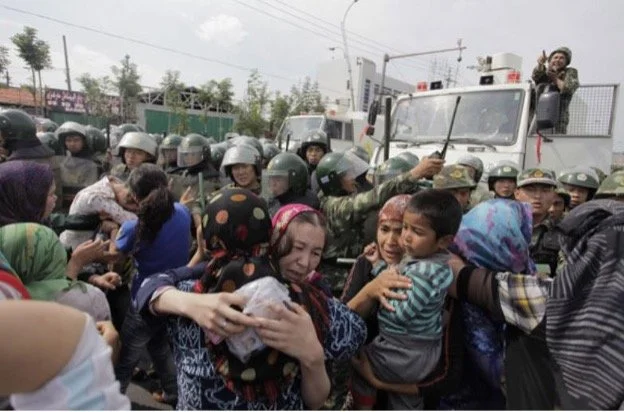
The inability of Chinese lawyers and judges to protect the rights of the country’s persecuted Uyghur Muslims is due to the corrupted nature of China’s weak judiciary. Despite recent government efforts to prove otherwise, the courts of the People’s Republic of China remain little more than rubber stamps for the reigning Communist Party.
Read More
Unique French Trial with Significant Impact
By Jennifer Churay.
In November 2015, a series of terrorist attacks in Paris, France left hundreds of people dead or injured. After the attacks, France declared a state of emergency, implemented new laws, and prepared for a historic criminal trial. Unfortunately, the world is all too familiar with terrorist attacks. However, the trial for the accused defendants of the 2015 attacks is unique in several ways.
Read More
Only Yes Means Yes: A New Consent Law in Spain Makes any Sexual Act Done without Clear Consent Prosecutable as Rape
By Haley Wehner.
In the last few years, Spanish media has been filled with various stories of horrific sexual assault cases. The Spanish people have rejected various media and defendants attempts to blame victims of alleged assault. As a result, in 2022, the Spanish legislature passed a new law stating that any sex that takes place without clear consent from the accuser can now be prosecuted as rape.
Read More
A Dispute for the Valley: The Brunt of 35A's Abrogation on the Kashmiri People
By Ilina Krishen.
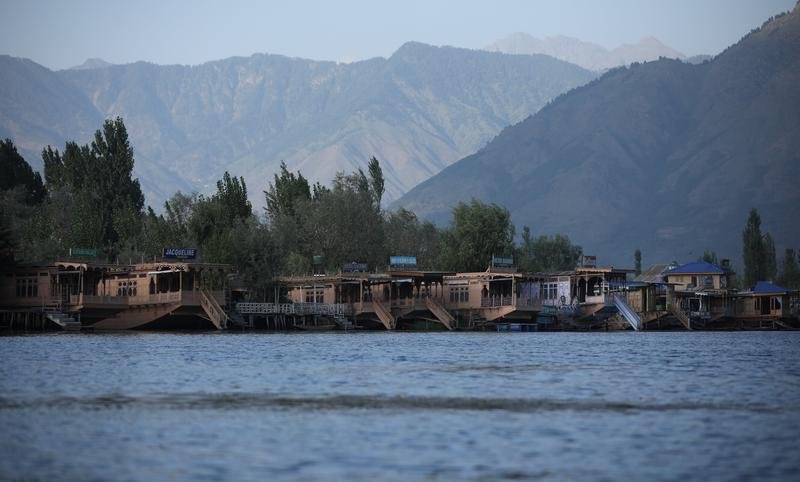
Kashmir remains an internationally recognized dispute. By safeguarding the rights to owning land, Article 35A served as Kashmir’s primary line of defense against outside interference prior to its abrogation in 2019. Abrogating Article 35A, then, releases a domino effect in abolishing crucial land policy that would otherwise offer limited protection for Kashmiris seeking to continue residing on their own land without fear of displacement.
Read More
Work-Life Balance: The Case of Portugal vs. United States
By Haley Wadel.
Portugal has banned bosses from texting employees after working hours in order to promote a healthier work-life balance. Could this ever happen in the United States?
Read More
The Failure and Proposed Revision of Legalized Prostitution in the Netherlands
By Mason Van Gorp.
Over the last two decades, there has been a clear intersection of legalized prostitution and human trafficking. Now, with a recent change in Dutch legislation, what follows is an analysis recounting the failures of legalizing prostitution in the Netherlands and predicting if the new legislation will rectify them.
Read More
The Shadow Economy Hides More Than Just Money: Offshore Trusts and Cambodian Relics
By Austin Trummel.
Trusts have been increasing abused to conceal wealth, wealth of which usually is found in the form of money. However, offshore can and have been used to conceal stolen cultural relics, too. Cambodian antiquities looted decades ago are being returned to the country after the Pandora Papers uncovered their paper trail.
Read More
Hunger Strikes Under Israeli Occupation
By Amal Shukr.
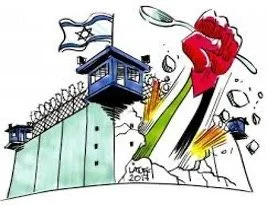
Despite its illegality under international law, the Israeli Occupier continues to administratively detain Palestinians for indefinite periods of time—without any regard to fair notions of due process. Such arbitrary detainment has prompted many Palestinian detainees to use the only means of protest available to them behind suffocating bars: hunger strikes.
Read More
European Data Protection Supervisor Orders Europol to Delete Uncategorized Data Older Than Six Months
By David Rosado.
The European Data Protection Supervisor notified the European Union Agency for Law Enforcement Cooperation of an order that they must delete data held in their possession of individuals who have no established link to criminal activity six months after having received the data. Europol believes that this order will hinder their criminal investigations, as investigations can last years.
Read More
Law and Cyberwarfare: The Need for International Humanitarian Law to go Online
By Mitchell Purdy.
Given the increasingly widespread use of cyberattacks and cyberwarfare to politically, militarily, and economically weaken nations, there is a need for international regulation. This post is a call to action for the leaders of the world to make rules to limit the suffering caused by cyberwarfare.
Read More
India’s Dehydrated Condition: Will India Ever Achieve Water Sustainability?
By Camile Loftin.
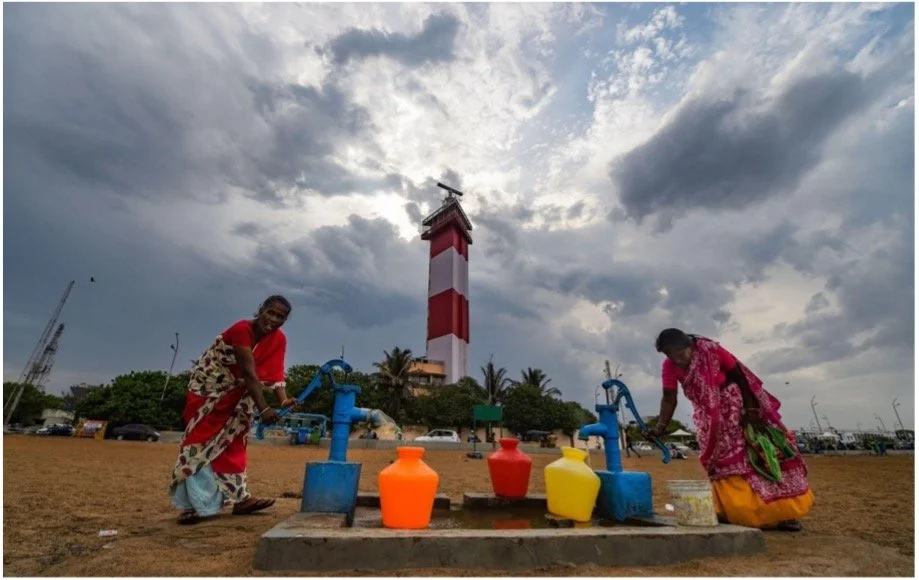
India suffers from one of the worst water crises in the world. This water shortage impacts the nation’s economy, agricultural production, safe drinking water, and citizens’ way of life. If India implements legislation to regulate water consumption and enters into international agreements to obtain access to water technologies, India may have a chance to once again become an abundant and self-sustaining nation.
Read More
New Zealand: Advocating for the Rights of Sexual Assault Victims
By Jordan Law.
This blog post discusses the new legislation introduced in New Zealand. This legislation provides protection for victims of sexual violence through new evidence rules.
Read More
Modern Day Holocaust: China and the Genocide of the Uyghur Muslims
By Rohaib Latif.
The Uyghurs are a Turkic ethnic group whose members are predominantly Muslim that live in the Xinjiang region in Northwestern China. In recent years, the Chinese government has forced the Uyghur population into a state of mass surveillance, detention centers, and forced assimilation. China says that “this crackdown is necessary to prevent terrorism and root out Islamic extremism.”
Read More