Kenyan Supreme Court: Election Fraud Stops Now
By: Max Mittleman.
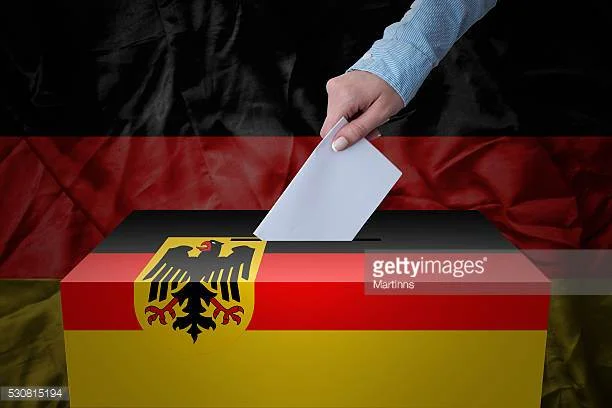
Concerns over election fraud and hacking have become a world-wide concern. Kenya joins many other countries left questioning the authenticity of election results, with this issue being reviewed by that nation's Supreme Court. Has Kenyan democracy has been given a new jolt of energy which may provide for future election legitimacy?
Image attribution: By JimSlim, information available at https://commons.wikimedia.org/wiki/File:25332612.nairoboi013.JPG.
Read More
Hydropeaking in Austria
By: Sarah Faris.
Fourteen nations have contracted to be regulated by an EU regulatory framework for the purpose of protecting the water quality in the Danube River Basin. Austria is a member of this agreement and has been a leader in incorporating this framework into national regulation. However, Austria uses the hydropeaking process to create hydroelectricity, which has been shown to have a negative impact on certain river species. Although full effects are still unknown, there may be a way to get the best of both worlds: protect the species as well as maintain the benefits of hydroelectricity.
Read More
Country at War: No One can Agree What to do With Australia’s Trees
By: Andrew Kemmer.
In New South Wales, Australia, new legislation recently came into effect that changed the regulations for vegetation-clearing. Farmers have long believed they had too little say over what they could do with their land. New legislation could give farmers much more latitude to clear vegetation on their land, but they’re unfinished, hard to understand, and have environmentalists in an uproar.
Read More
Restriction Of Fertility Treatments In China: Law Against Human Rights?
By: Mollie M. McSweeney.
Single, unmarried women, who desire to have children later in life, are restricted by the Chinese government from seeking reproductive services such as freezing their eggs. Further, if a woman has a child out of wedlock, the child and the woman become social outcasts who are forced to pay fees and prohibited from receiving health and education services. This article urges the Chinese government to reflect the values of a modern society by allowing all women the freedom to reproduce.
Read More
Lukashenko’s Monopoly: Media Freedoms In The “Last Dictatorship In Europe” In The Internet Age
By: Michael T. Moran.
Since 1994, the Belarusian government—headed by President Alexander Lukashenko—has systematically repressed viable political opposition. Lukashenko has consolidated political power by curbing media freedoms and the dissemination of information deemed detrimental to the regime. However, the inception of the Internet has provided alternative channels of information collection, which in turn has emboldened Belarusian citizens to question and confront the status quo. In early 2017, however, planned peaceful protests throughout Belarusian urban centers opposing the Lukashenko regime were met with violent backlash from police forces.
Read More
Venezuela’s Controversial Constitution Rewrite
By: Alexandra Stafford.
Is it possible to rewrite a Constitution? Is it possible to do so avoiding volatile public upheaval? Venezuela is facing these issues after the announcement by President Nicolas Madura to rewrite the Venezuelan Constitution.
Image attribution: By Jonathan Alvarez C (Own work) [CC BY-SA 3.0 (https://creativecommons.org/licenses/by-sa/3.0)], via Wikimedia Commons
Read More
New German law fines social media companies for failing to remove hate speech, raising free speech concerns
By: Alexandra Arkin.
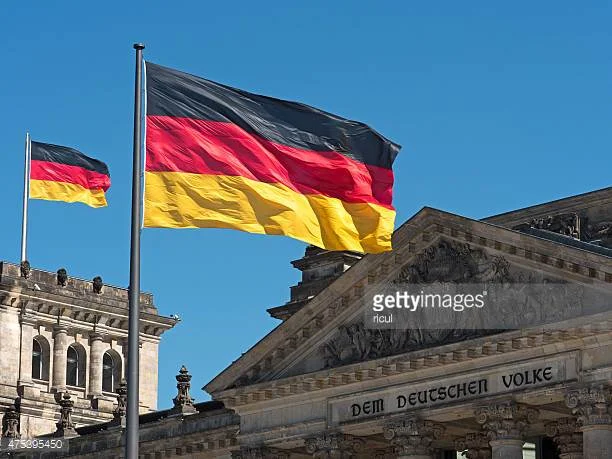
Post-Charlottesville, Silicon Valley is rethinking how far it will go to fight hate speech. But Germany has long taken a different approach, with some of the strictest free speech and anti-defamation laws in Europe. Recent years have seen an increase in hate speech/anti-immigrant propaganda and fake news, which take on new urgency ahead of Germany’s Sept. 24 parliamentary elections. Germany is now stepping up its efforts with a new law that fines social media companies more than $58 million for failing to promptly delete illegal, racist, or slanderous comments and posts.
Read More
Stopping a Seemingly Unstoppable Force: The War between ISIS and the Syrian Government
By: Kathryn Bristor.
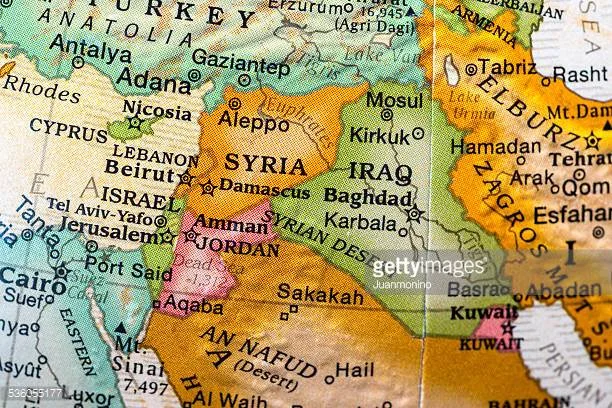
This post explores the impact of ISIS’ presence in Syria, the legal principles underlying the conflict, and the devastating reality that UN members may not have the ability to intervene in the war that is raging on within the Syrian borders. Through the examination of customary international law, it is apparent that foreign involvement may prove to be more difficult than at first glance.
Read More
Why, How, & Now: Behind the Lightning-fast Internet Speeds that Fuel the Republic of Korea’s e-Government
By: Sydney Wright.
As the Republic of Korea gains recognition for the world’s fastest internet speeds, citizens are doing more than just streaming Netflix on the subway. Read how the Republic is revolutionizing democracy, boasting some of the most efficient e-Government services and ranking among the top in the world for citizen participation in government.
Read More
A Push for More Data Privacy in New Zealand
By: Gary Gonzalez
Data privacy is a hot topic around the globe. The General Data Protection Regulation is a leading factor for this trend. The regulation affects all companies conducting business within the European Union. One of the countries seeking to increase its data privacy laws is New Zealand. The United States, however, has taken a step in the other direction. This paper will briefly touch on the upcoming changes to U.S. privacy laws, and then explain the proposed changes to New Zealand’s privacy laws.
Read More
The Right to Marry in Israel: An Anti-Miscegenation Law Masquerading as Traditional Religious Values
By: Jacob Simon.
Anti-miscegenation appears to be alive and well in the Jewish State of Israel where all marriages must be performed by religious officials, and interreligious marriage is strictly prohibited. This religious based restriction on marriage becomes the equivalent to an anti-miscegenation law when the bloodline requirement to be considered Jewish enough for marriage to another Jew by the Orthodox Jewish Rabbinical Court is also taken into account. Those who follow Israel politics closely should not be shocked to learn that the Rabbinical Courts have become even more hostile in recent years to Jewish converts and the children of Jewish converts.
Read More
Germany’s Deportation Practices: Familiar Rhetoric & Why We Cannot Ignore What’s Happening Across the Pond
By: Angela C. White.
German deportation practices have been a point of controversy in recent months, especially since the German government has accelerated its deportation processes for those who do not qualify for refugee protection. According to Chancellor Angela Merkel’s Chief of Staff Peter Altmaier, the push to deport more people was an attempt to persuade conservative voters and preserve support for the asylum system.
Read More
Constitutional Crisis in Poland
By: Steven Simmons.
A constitutional crisis is continuing to unfold in Poland. In late 2016, the Polish nationalist right-wing government succeeded in packing Poland’s Constitutional Tribunal, an important check on legislative and executive power in Poland, capping a year-long campaign where the court overturned numerous laws as unconstitutional.
Read More
China's Forced Repatriation of North Korean Defectors
By: Abbie Carver.
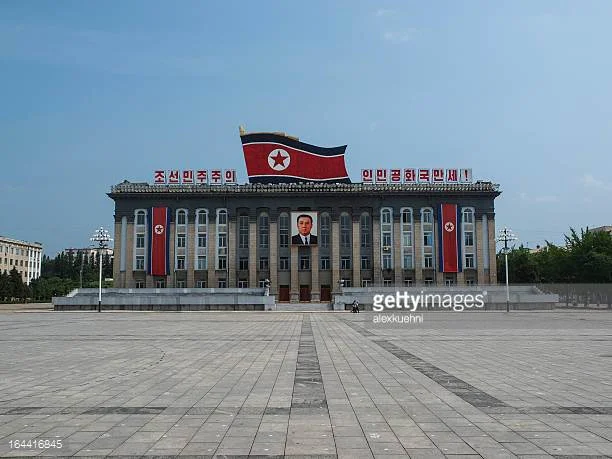
The human rights concerns surrounding the DPRK are abundant. Tens of thousands of North Korean civilians have been abducted by the North Korean government; family members of “dissidents” have disappeared; North Koreans sent to prison camps experience torture and other cruel, inhuman, or degrading treatment (many fall ill or die soon after entering custody); citizens must obtain permission to travel within the country as well as abroad; women are trafficked and forced into marriages; and millions of North Koreans face extreme hunger or starvation.
Read More
How Latin and South America Protects Intellectual Property
By: Tyler Seling.
Protecting intellectual property (“IP”) is an important aspect of any business or organization. Whether utilizing trademarks for brand development, copyrights for the works of authorship, or patents for the design or innovation it’s created, having an established IP policy is critical to succeeding in the competitive digital market.
Read More